

At a glance
Senso-ji Temple, Tokyo's oldest Buddhist temple, stands as a cultural landmark in Asakusa, dating back to 645 CE. This historic temple, dedicated to Kannon (goddess of mercy), features the iconic Kaminarimon Gate, traditional Nakamise shopping street, and free admission to its serene grounds.
Photographs
Senso-ji
Senso-ji Temple sits in the heart of Asakusa and is Tokyo’s oldest Buddhist temple, founded in 645 AD. Its iconic Kaminarimon Gate, with the massive red lantern and statues of the gods of wind and thunder, marks the start of a spiritual and sensory journey into Tokyo’s deep history.
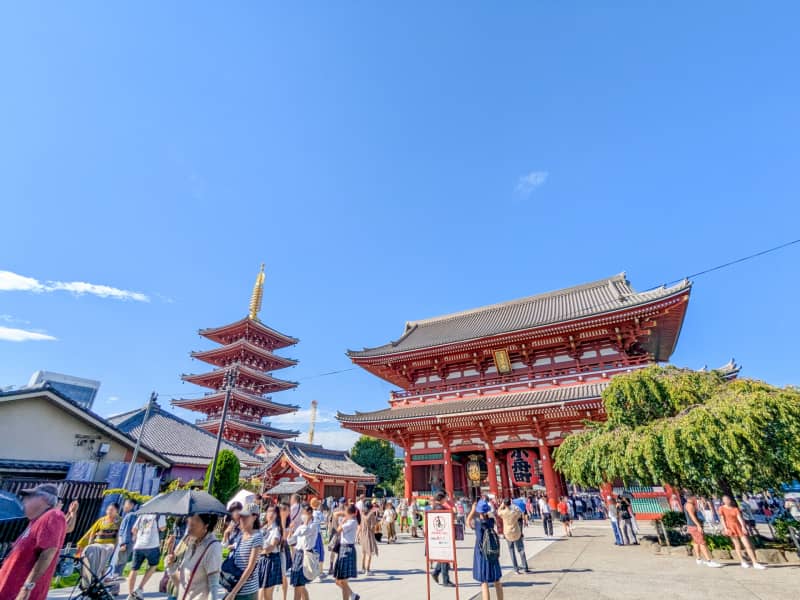

Walking along Nakamise-dori, the lively shopping street leading up to the temple, you’re surrounded by the smell of fresh ningyo-yaki, the sound of clogs on pavement, and the bright colors of traditional paper fans, yukata, and handmade crafts. This street has been serving visitors for centuries, and many of the stalls have been family-run for generations.
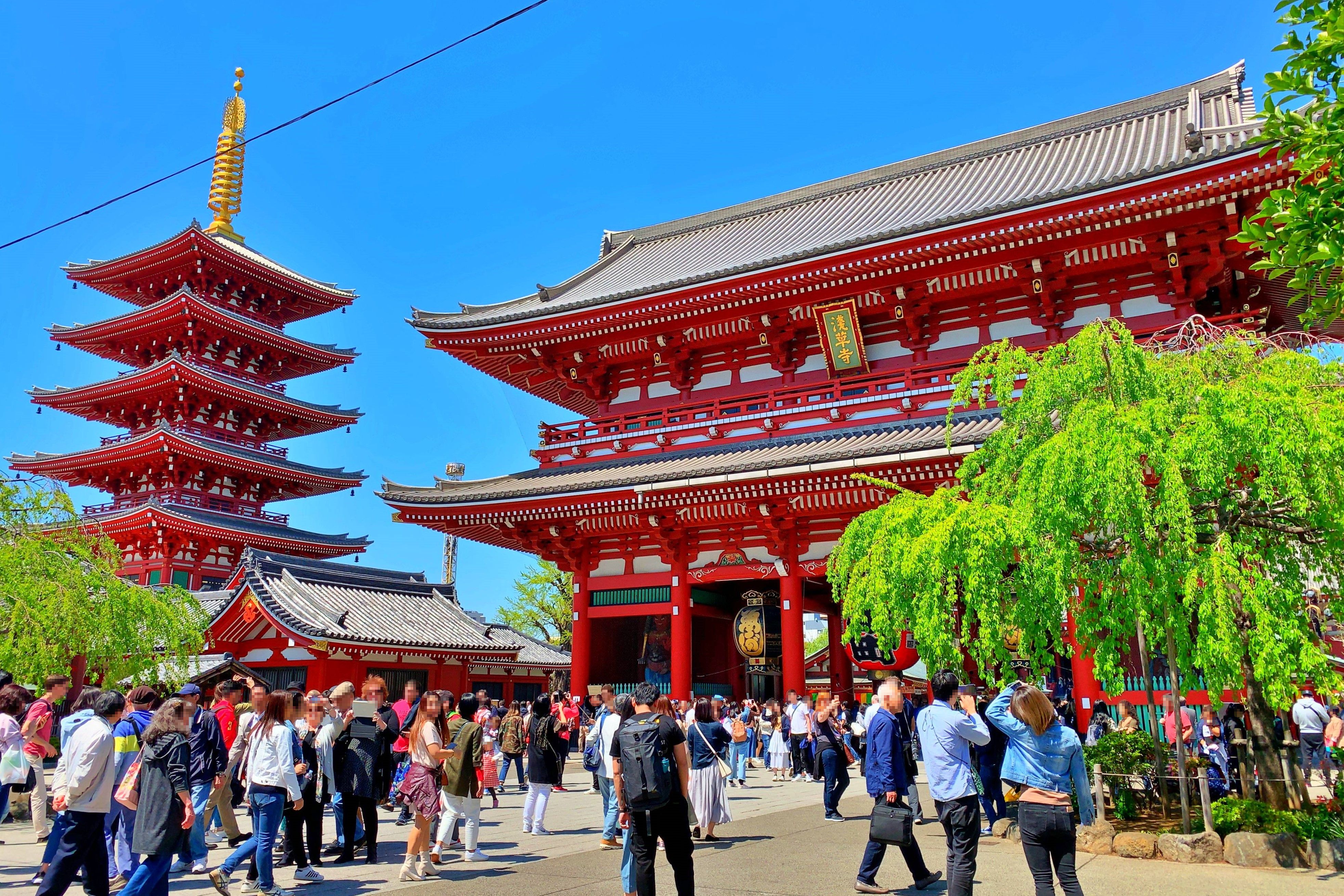
Passing through the inner Hozomon Gate, you’ll find massive straw sandals symbolizing protection and strength. Just beyond it lies the Main Hall, dedicated to Kannon, the bodhisattva of mercy. The atmosphere here is deeply spiritual, filled with the scent of incense, the clink of coins, and the quiet murmurs of visitors drawing fortunes or waving incense smoke toward themselves for health and good luck.


To the side, the five-story pagoda rises elegantly into the sky. Its graceful form is especially beautiful in the early evening when it begins to glow softly with the setting sun. Throughout the year, the temple hosts a series of traditional events, from cherry blossom blessings in spring to the vibrant Sanja Matsuri in early summer, and even quieter seasonal rituals that reflect the natural rhythm of the year.

While Senso-ji is nearly always busy, there are still peaceful moments to be found. Early mornings offer calm reflection, and evenings reveal a different kind of beauty as lanterns light the grounds and cast soft shadows across the ancient stones. The temple complex is particularly enchanting in the evening when lanterns illuminate the grounds, creating a magical atmosphere that contrasts beautifully with the daytime energy. The temple grounds remain accessible 24 hours, though the main hall observes specific opening hours, allowing visitors to experience this sacred space at different times of day.
Before you go
Admission is free. Wear comfortable shoes as Nakamise Street and temple grounds involve cobblestones. Bring cash for small purchases, omikuji (100 ¥), and goshuin (500 to 1,500 ¥) since many stalls are cash-only. There are public restrooms near the temple and along Nakamise. English signs help, though some smaller shops may only have Japanese menus. Consider visiting early mornings to avoid crowds.
The temple grounds at Senso-ji are open to visitors 24 hours a day, allowing for peaceful early morning strolls or atmospheric nighttime visits when the grounds are softly lit. The main hall opens at 6:00 AM (6:30 AM in winter) and closes at 5:00 PM, while the five-story pagoda follows similar hours.
When to go
Spring (March-May) brings stunning cherry blossoms to the temple grounds, while autumn (October-November) offers vibrant foliage and comfortable temperatures. Winter illuminations create a magical atmosphere, though summer can be uncomfortably hot and humid with large crowds. Early morning visits between 6:00-8:00 AM offer the most serene temple experience with fewer tourists and beautiful morning light. The temple grounds are accessible 24 hours, though the main hall operates from 6:00 AM to 5:00 PM.
Dates of festivals/ceremonies held at Senso-ji temple:
March 18 – Golden Dragon Dance (Kinryū-no-Mai)
2nd Sunday in April (estimated) – White Heron Dance (Shirasagi-no-Mai)
3rd Friday to Sunday in May (estimated) – Sanja Matsuri
July 9 to 10 – Hōzuki Market (Hōzuki-ichi)
October 18 – Golden Dragon Dance (Kinryū-no-Mai)
November 3 – White Heron Dance (Shirasagi-no-Mai)
December 17–19 – Hagoita Market (Hagoita-ichi)
December 31 – Year-End Bell Ceremony (Joya-no-Kane) & Osame-no-Kannon
Public review summary
Visitors praise the temples striking architecture and spiritual atmosphere while noting the vibrant energy of Nakamise shopping street. Early morning visits are recommended for a more serene experience, as crowds can become overwhelming during peak hours. The traditional shops and street food receive consistent praise, though some mention challenges navigating through dense crowds. The illuminated evening views and cultural authenticity balance the bustling daytime atmosphere.
What you'll find here
Location & access
- DirectionsAddress
2 Chome-3-1 Asakusa, Taito City, Tokyo 111-0032, Japan
- How to get there
By Public Transportation: Take the Tokyo Metro Ginza Line, Toei Asakusa Line, or Tobu Skytree Line to Asakusa Station. Use Exit 1 (Ginza Line) or A5 (Asakusa Line)—just a 1-minute walk to Kaminarimon Gate.
By Car: Driving in central Asakusa can be tricky. Limited parking is available near the temple, but Tokyo traffic and narrow streets make public transit much easier. If you drive, arrive early or after 5 PM and use a nearby paid parking lot.
Common questions
Is Senso-ji Temple free to visit?
Yes, entrance to Senso-ji Temple is completely free for all visitors. While you can make optional donations or purchase charms and fortunes inside the temple grounds, there is no admission fee to explore this historic Buddhist temple.
What is the significance of the large red lantern at the entrance?
The iconic red lantern at Kaminarimon Gate was donated by Konosuke Matsushita after World War II. It features a dragon carving on the back for fire protection and has become one of Tokyo's most recognizable symbols.
Can I get an English fortune (omikuji) at the temple?
Yes, English fortunes are available with translations on the back of the paper. While most content is in Japanese, there are English explanations of the fortune-telling process. It costs 100 yen and is a popular way to participate in local traditions.
Is the temple accessible by wheelchair?
Yes, Senso-ji Temple is wheelchair accessible with dedicated entrance points. The temple grounds are designed to accommodate visitors with mobility needs, making it possible to explore most areas of this historic site.
What makes Senso-ji unique among Tokyo temples?
Completed in 645, Senso-ji is Tokyo's oldest Buddhist temple and was built to honor Kannon, the goddess of mercy. It attracts over 30 million visitors annually and features the famous Nakamise shopping street leading to the main temple buildings.
Bring this spot to life with a local photographer
Book a vetted local photographer who knows the best light, angles, and timing for this location.