
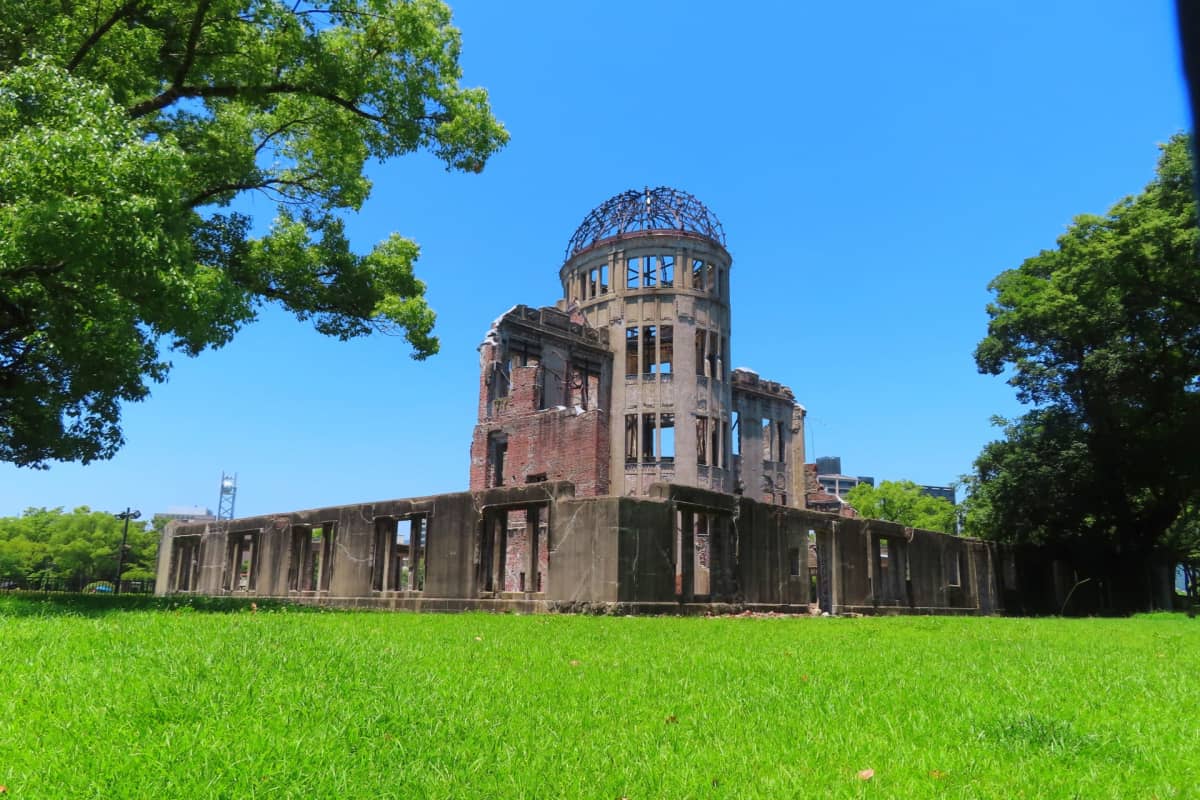
At a glance
The Atomic Bomb Dome (Genbaku Dome) stands as a haunting reminder of the 1945 atomic bombing in Hiroshima. This UNESCO World Heritage site preserves the skeletal ruins of the former Industrial Promotion Hall, serving as a powerful symbol of peace and nuclear disarmament for future generations.
Photographs
Atomic Bomb Dome
The Atomic Bomb Dome began its life in 1915 as the Hiroshima Prefectural Industrial Promotion Hall, designed by Czech architect Jan Letzel. It showcased local industry and art in a striking European-style brick building capped by an elegant dome. Over the years it hosted exhibitions and government offices, becoming a familiar landmark in Hiroshima’s commercial district.
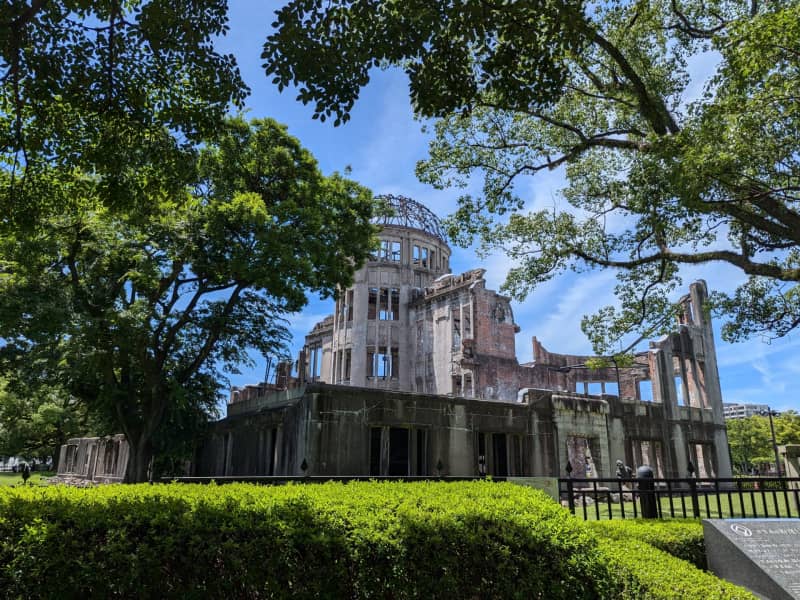


On August 6, 1945, the first atomic bomb was dropped almost directly above the building, just 160 meters from the explosion’s hypocenter. The blast, estimated at some 15,000 tons of TNT equivalent, collapsed much of the building, but the central skeletal structure and steel frame dome remarkably survived, preserving the ruin in the exact position where the bomb struck.
In the aftermath, the ruin was called the Genbaku Dome, and over decades it became a carefully preserved memorial. While some debated whether to remove the wreckage, Hiroshima city resolved in 1966 to protect it permanently. The site underwent preservation work in 1967, 1989, and 2002, using reinforcing steel and resin to stabilize the original structure while retaining its blasted form.
The Dome is now the iconic centerpiece of the Hiroshima Peace Memorial Park, a designated a UNESCO World Heritage site. Just steps away lies the Hiroshima Peace Memorial Museum, where exhibitions and personal testimonies provide powerful context to the Dome’s haunting presence. Together, these sites form one of the most emotionally resonant places in Japan.


Walking around it today, you sense its quiet gravity. Charred brick, twisted steel, and the exposed dome frame speak volumes. From across the Motoyasu River or in the adjacent park, the exposed interior and collapsing gallery walls feel like a wounded witness to history. It is impossible to ignore its aura of loss and resilience.
Despite not being open for entry, vantage points along the river and well-placed plaques in English and Japanese help guide your understanding. Visitors often describe the feeling as small in front of it, a mix of reverence and sobering reflection.
In a city that has rebuilt outwardly, the Dome stands as a powerful counterpoint. The silent, skeletal silhouette bears witness to both devastation and hope. Its preservation, supported by local fundraising and citizen movements, transformed what might have been rubble into a worldly pledge: never again.
Before you go
The Dome site is free and accessible 24 hours a day. There is no entry inside the building, viewing is always from the outside. Footpaths are flat and paved, easy to navigate, though some areas lie close to water. Tripods are okay but discreet use is appreciated. No cafés or toilets on the immediate Dome site; those are available inside the broader park near the Peace Memorial Museum. Signs and plaques are in both Japanese and English. Visitors are asked to behave respectfully, silence and low voices maintain the solemn atmosphere.
The Peace Memorial Park, including the Dome area, is open year‑round. There are no special holiday closures. On August 6th, the annual Hiroshima Peace Memorial Ceremony is held, note the park is especially busy that morning with memorial events, including the release of lanterns on the Motoyasu River at dusk.
When to go
Spring and autumn offer the most comfortable weather for visiting the Atomic Bomb Dome, with mild temperatures ideal for outdoor reflection. The site is particularly moving during August when memorial ceremonies are held and paper lanterns float on the nearby river. Early morning visits before 9 AM provide the most serene atmosphere for contemplation and photography, while weekday afternoons tend to have moderate crowds. Consider visiting during dawn or dusk when the dome's silhouette creates a powerful visual impact against the changing sky.
Average crowd levels throughout the day, based on historical data.
Public review summary
Visitors consistently describe the Atomic Bomb Dome as a profoundly moving and sobering experience. The preserved ruins evoke strong emotional responses, with many noting the peaceful atmosphere despite the sites tragic history. While some mention crowding during peak hours can impact reflection time, the sites power to educate and inspire contemplation about peace remains its defining characteristic. Special nighttime illumination adds another perspective, though some suggest visiting earlier for better photo opportunities.
What you'll find here
Location & access
- DirectionsAddress
1-10 Otemachi, Naka Ward, Hiroshima, 730-0051, Japan
- How to get there
Public Transportation: From JR Hiroshima Station, walk or take the Hiroden streetcar (No. 2 or No. 6) to Genbaku Dome‑mae Station, then a 1‑minute walk to the Dome. Alternatively, take the Hiroshima City Loop Bus from the station to the Atomic Bomb Dome stop, then walk a minute more .
By Car: There is no private parking at the Dome itself. Use nearby paid parking lots. From National Route 54, turn at the Kamiyacho intersection and proceed about 400 meters west to reach the Dome vicinity
Common questions
What is the exact location of where the atomic bomb fell in Hiroshima?
The bomb exploded approximately 600 meters above ground and 160 meters away from the Atomic Bomb Dome. The exact point was near the Shima Hospital area, though the Dome serves as the most recognizable landmark of the blast site due to its survival and proximity.
How tall is the Atomic Bomb Dome?
The Atomic Bomb Dome stands 25 meters tall. This historic structure, formerly the Hiroshima Prefectural Industrial Promotion Hall, maintains its original height despite the devastating impact of the atomic bomb in 1945.
When was the Atomic Bomb Dome originally built?
The building was constructed in 1915 and designed by Czech architect Jan Letzl. Originally serving as the Hiroshima Prefectural Industrial Promotion Hall, it was a center for showcasing local products and hosting cultural events before the atomic bombing.
Can visitors enter the Atomic Bomb Dome?
No, visitors cannot enter the building as it remains a preserved ruin and is considered structurally unsafe. The dome can be viewed from the outside 24 hours a day, and serves as a memorial to be observed from the surrounding Peace Park area.
Is there parking available at the Atomic Bomb Dome?
While there are paid parking lots in the vicinity, there is no dedicated parking directly at the dome. Most visitors are recommended to reach the site by public transportation, walking from nearby stations, or using the local tram system.

Bring this spot to life with a local photographer
Book a vetted local photographer who knows the best light, angles, and timing for this location.